No.126 September.28, 2016 |
| |
Subscribe |
 |
|
|
| |
Contact us |
|
| |
7Th/8Th/11th Floor,Scitech Place, 22 Jianguo Menwai Ave.,Beijing 100004,P.R.China
T: +8610 59208888
F: +8610 85110966 85110968
Web: www.unitalen.com
E-mail: mail@unitalen.com |
|
| |
|
|
| |
|
|
| |
|
|
|
|
| The Oriental Pearl TV Tower Of Shanghai
|
|
|
| |
|
| |
|
|
| |
| Unitalen News |
|
| |
| |
In this issue
|
 |
|
|
 China Supreme Court: Provisions on Publication of Judgments on the Internet China Supreme Court: Provisions on Publication of Judgments on the Internet |
|
| |
| |
During a recent press conference, China Supreme Court introduced the revised“Provisions on the Publication of Judgments on the Internet” to the public, and annouced the debut of China Judgements Online APP.
The revision features the following four measures:
1. to include a broader range of judgements that shall be published;
2. to provide more specific regulations on the conditions in which judgements are not subject to online publication;
3. to further improve the operating procedures of judgements publication;
4. to further emphasize public supervision.
According to the revision, judgements that shall be published include court verdicts, rulings, decisions, dismissal notices of petition, orders of payment, administrative bills of mediation, civil bills of mediation on public interest litigation, as well as other judgements which have the effect of suspending or terminating a litigation procedure, or have impact on the sustantive rights and interests, or significant impact on the procedural rights and interests, of the parties involved. Judgements on cases involving personal privacy shall be published online after removal of contents involving personal privacy. In addition, judgements of the first instance, which have been appealed or protested, shall also be included in the range of publication, and be connected with the second-instance judgement to present the whole picture of the cases.
As known, the daily traffic to China Judgements Online website http://wenshu.court.gov.cn/ has been over 20 million since August 2016 and the volume is growing in trend. As of September 16, there have been over 20 million judgements published online and the overall traffic has surpassed 2 billion with visitors from over 190 countries and areas, among which over 500 million visits are from overseas, with over 100 million visits from North America.
|
|
|
| |
| |
|
| United Nation: China becomes the World’s Largest Internet Market |
|
| |
| |
In the recent “2016 Broadband Status Report” published by Broadband Commision of UNESCO, China is found as the largest Internet market of the world with 721 million internet users.
The data shows that, under the continuous strengthening of IP porection, E-commerce activities and related industries are growing at a fast rate in China, which has become a new source of economic growth in the country. In 2015, the E-commerce transaction in China was over 1.83 billion yuan, up 36.5% from the previous year. By UNESCO forecast, there will be 3.5 billion internet users around the world by the end of 2016, compared to 3.2 billion users of last year, which is equipvalent to 47% of the global population.
|
|
|
| |
|
|
|
| Cases in Spotlight
|
|
| |
| Unitalen Defended Client against “Magnetic levitation” Patent Infringement Suit |
|
| |
|
| “Maglev (Magnetic levitation)” is a technology that uses magnetic force against gravity to levitate objects. As known, there are 3 kinds of “maglev” technologies: one is the “routine conductive maglev” led by Germany, the second is “superconductive maglev” led by Japan, both of which require electricity power to generate maglev force; and the third is China’s “permanent maglev” which, by using a special permanent magnetic material, doesn’t require any other power support.
The plaintiff, Guangdong Zhaoqing HCNT Technology Ltd. is the owner of No. 200610065336.1 invention patent concerning “Magnetic-repellent suspension device”, and had won more than 10 patent infringement suits across the country.
On July 27, 2015, the plaintiff filed a suit before Hangzhou Intermediate Court alleging against Shenzhen Hong Xin Tuo Pu Electronic Technology Ltd. (the defendant) for selling in large quantity infringing products on Alibaba and T-Mall online stores, along with the claim for an indemnity of 500,000 yuan and other reasonable legal fees.
Entrusted by the defendant, Unitalen attended court hearing with four defenses: 1) prior art defense; 2) doctrine of estoppels, as the plaintiff had voluntarily narrowed down the protection scope of its patent, namely “the levitation object is permanent magnetic levitation object instead of electric magnetic levitation object”; 3) the protection scope of the claims shall be interpreted as being limited to “one ring-shaped permanent magnet” rather than “one and more ring-shaped permanent magnet(s)” despite the open-ended claim with the word “including”; and 4) the technical feature described in claim 1 is a “functional limitation”, under which circumstances the Court shall determine the content of the technical feature by making reference to the specific implementing methods or equivalent methods described in the specifications and drawings, according to Judicial Interpretations concerning patent disputes. But due to the plaintiff’s failure to take on its own “burden of proof” by resorting to judicial expertise, there is no target comparable to the technical solution of the alleged infringing product.
On August 24, 2016, Hangzhou Intermediate People’s Court issued the first instance judgment dismissing all of the plaintiff’s claims. According to the court, the plaintiff shall bear the burden to prove the establishment of infringement, the precondition for which is that the alleged infringing product possesses the technical features identical with or equivalents to all of the technical features under the plaintiff’s claims. As the plaintiff withdrew its applications for judicial expertise and professional assistant due to the concern of the high cost, the technical features under the functional limitation cannot be compared one by one, thus it cannot be determined whether the alleged infringing product falls within the protection scope of the patent at issue. Therefore, the patent infringement claims submitted by the plaintiff shall not be sustained.
|
|
|
| |
| |
|
| Tang Yuan Sheng Tang vs Feiyin and Qihoo
- Trademark Rights vs Game’s Name
|
|
| |
|
Case Summary:
Appellant (Plaintiff of the first instance): Beijing Tang Yuan Sheng Tang Entertainment Technology Ltd. (Tang Yuan Sheng Tang)
Appellees (Defendants of the first instance): Guangzhou Feiyin Information Technology Ltd. (Feiyin); Beijing Qihoo Technology Ltd. (Qihoo)
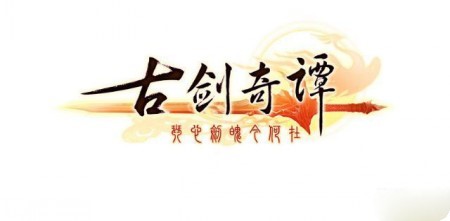
“Gu Jian” (古剑, Ancient Swords) and “Gu Jian Qi Tan” (古剑奇谭, The Legends of Ancient Swords) are both marks in colors and registered in Class 9 for “recorded computer software” as well as in Class 41 for “online games provided through computer networks”. As licensee of both marks, Wang Yuan Sheng Tang company filed a lawsuit against Feiyin for developing and Qihoo for operating an online game named “Gu Jian Qi Xia” (古剑奇侠, The Heroes of Ancient Swords) for trademark infringement. The first instance court didn’t find the name of the alleged infringing game being identical or similar to the plaintiff’s registered trademarks and dismissed the plaintiff’s requests. In disagreement, Wang Yuan Sheng Tang appealed to Guangzhou IP Court, who believed that the name of the alleged infringing game refers to the goods/services that are identical with the designated goods/services of the plaintiff’s registered trademarks, but the alleged infringing name is distinguishable from the two cited marks in terms of typography, layout, graphic design and color combination, especially the overall visual effect achieved by the choice of font styles, colors, layout of words and background. The court believed that the relevant public will not be confused and hence dismissed the requests of Wang Yuan Sheng Tang once again.
Comment:
In determining trademark infringement, the premise is that the infringer’s conduct at issue has constituted trademark use. According to Article 76 of the Implementing Regulation of China Trademark Law, it is an act of trademark infringement to use a symbol identical with or similar to other’s registered trademark as the name of product and hence mislead the public. However, there are different opinions on whether the use of trademark as the name of a product shall be determined as trademark use. The name of product is used to distinguish one kind of product from another by summarizing the characteristics of product quality, functions, usage etc. There are mainly two types of words composing a product name: one that describes the product’ natures, e.g. quality, features, functions and usages, and the other being made-up words but has become a product name after repetitive use. While the first type of words is used as trademark, it involves fair use; and when the second type of words is used as trademark, there is an issue of product’s generic name.
When a product name is in overlapped use with a trademark, therefore, the above-mentioned situations will have impact on the determination of trademark infringement. The Supreme People’s Court, in its reply to the trademark infringement and unfair competition case of Yuanhang Tech vs. Tencent Computer System Co. Ltd., indicates that for a name of poker game, to which the relevant public of a certain territorial area are already subscribed to, so long as the party (the defendant)did not use such name as trademark to distinguish the source of goods or services, but to reflect the content and features of the games only, such use shall be considered as fair use. Generally speaking, the change in the visual factors of a game’s name, e.g. the type font of Chinese character, layouts and colors, will not affect its function of distinguishing one game from another. But if the visual factors of a trademark are arranged in a unique manner, the protection scope of the trademark is actually limited. In determining this type of trademark infringement, the difference in the above-mentioned visual effects shall be given consideration, otherwise it would allow trademark owner to monopolize the word in an unfair manner in destruction to the balance of interest between trademark right owners and social public. Besides, as far as game products are concerned, the major factors for identifying different sources of games are the games’ rules, the systems, the appearances etc. In the case discussed in this article, general public finds the two games differ in all of the above-mentioned areas, therefore, it is unlikely to cause confusion among the general game players.

|
|
|
| |
| |
|
| Maotai vs Hanrong and Jinzun
A Case of Trademark Infringement via Advertisement
|
|
| |
|
Case Summary:
The plaintiff, Guizhou Moutai Group (Moutai), is the right owner of No. 3159143 registered trademark “ (designated color)” and No. 3159141 registered trademark “贵州茅台 (Guizhou Maotai)”. In the absence of the plaintiff’s authorization, the two defendants, Shenzhen Hanrong Century Industrial Co. Ltd. (Hanrong) and Shenzhen Jinzun Winery Co. Ltd. (Jinzun ), started a series of promotional events named “Maotai Startup Alliance” in Shenzhen, Xi’an and Chengdu etc. and used the above-mentioned registered trademarks to sell Maotai original liquor in small bottle. The events were propagated on Hanrong’s official website, Shenzhen Financial Daily Channel, Shenzhen Mobile Channel and many other national mainstream websites. (designated color)” and No. 3159141 registered trademark “贵州茅台 (Guizhou Maotai)”. In the absence of the plaintiff’s authorization, the two defendants, Shenzhen Hanrong Century Industrial Co. Ltd. (Hanrong) and Shenzhen Jinzun Winery Co. Ltd. (Jinzun ), started a series of promotional events named “Maotai Startup Alliance” in Shenzhen, Xi’an and Chengdu etc. and used the above-mentioned registered trademarks to sell Maotai original liquor in small bottle. The events were propagated on Hanrong’s official website, Shenzhen Financial Daily Channel, Shenzhen Mobile Channel and many other national mainstream websites.
The court believed that, although the defendants did not sell any counterfeit products using the registered trademarks, they did use thelogo, the wording of “Guizhou Moutai Group” and the trademark in the graphic of Guizhou Maotai Liquor extensively on the websites involved, propaganda materials, staff business cards, entrepreneur dealership agreements, as well as in the press conference and the related media reports on TV channels and mainstream websites, which are unauthorized use of the plaintiff’s trademark and constitutes trademark infringement.
Comment:
This case involves a special mode of trademark infringement conduct. According to Article 48 of the Trademark Law, “the use of trademarks as stipulated in this Law refers to the affixation of trademarks to commodities, commodity packaging or containers, as well as commodity exchange documents or the use of trademarks in advertisements, exhibitions, and for other commercial activities, in order to identify the source of the goods”. Any use of other’s trademark shall be based on the authorization or license from the right owners, otherwise, it shall constitute infringement. In this case, although the two defendants did not sell any counterfeit Maotai liquors, their conduct of taking advantage of Moutai’s reputation and using the plaintiff’s registered trademarks to propagate their so-called “Moutai Startup Program” along with sales of other products has also constituted trademark infringement, which could cause even greater damage to the society and the right owner’s business reputation.
|
|
|
| |
| |
| Unitalen News
|
|
|
|
| Unitalen 12th Annual IP Forum Held Successfully |
|
| |
| |
This September 22nd to 23rd, co-hosted by Beijing Intellectual Property association,Beijing Trademark Association (BTA) and Unitalen Attorneys at Law, the 12th Unitalen IP Forum was held in Beijing Jianguo Garden Hotel. 150 businesses had been attracted to this event.
The forum invited IP court judge and the expert from Trade Review and Adjudication Board (TRAB) to analyze legal regulations and judicial interpretations, giving guidance to businesses regarding the application of laws in dealing with IP issues in the most effective manner.
Other guest speakers include, Mr. Jian Guo Wang, Director of IP from Haier, who shared his IP management experience at the forum; and Mr. Zhifeng Lin, senior consultant of IP Talent, who delivered a speech on “patent operation and monetization”.
As the host of the forum, Unitalen had Mr. Jinwen Lu, senior IP consultant and partner, speak on “international patent mapping”, leading the audience to a deeper knowledge and understanding from the concept of patent to the risks and strategies for patents.
As one of the earliest IP forums in the industry, Unitalen Forum has become a yearly tradition. We thrive to provide a platform for experts of the field to help businesses face and resolve their problems.
|
|
|
| |
|
| |
|
|
|
|
|