Subscribe
Subscribe
Unsubscribe
Contact us
7th Floor,Scitech Place,22
Jianguomenwai
Avenue,Beijing
100004,China
T: +8610 59208888
F: +8610 59208588
Web:www.unitalen.com
E-mail:mail@unitalen.com
|
| No.205 August 28, 2023 | | In this issue |
|---|
| WIPO China: China Ranks First in PCT Applications with an Increase of 5.3% | | The Foreign Trade Law of the People's Republic of China Shall Come into Force from March 1, 2026 | | China and Austria Extend Patent Prosecution Highway Pilot Program | | Cases in Spotlight |
|---|
| Series of Cases Involving Disputes over Infringement on Invention Patent Rights Between a Foreign Company and a Technology Company in Chongqing, as well as a Technology Company in Shenzhen | | Dispute Case over Infringement on Computer Software Copyright Instituted by Company N against Grinding Machine Company A and Precision Tool Technology Company B | | Unitalen News |
|---|
| Unitalen Successfully Co-organized INTA 2026 Annual Meeting Beijing Warm-up Event | | Unitalen and French Law Firm CABINET LAVOIX Jointly Hosted an Online Seminar on Litigation Practices of the European Unified Patent Court |
| | In this issue |
|---|
WIPO China: China Ranks First in PCT Applications with an Increase of 5.3% |
|---|
In 2025, the global number of international patent applications filed through the Patent Cooperation Treaty (PCT) of the World Intellectual Property Organization (WIPO) increased by 0.7%, reaching 275,900, marking a second consecutive year of growth. Among them, digital communications remained the category with the highest proportion (11.1%) among published PCT applications, while semiconductors emerged as one of the fastest-growing fields among the primary areas of international patenting.
China ranked first with 73,718 applications, up 5.3%. It was followed by the United States (52,617 applications), Japan (47,922 applications), South Korea (25,016 applications), and Germany (16,441 applications). Huawei ranked first among all applicants with 7,523 published applications, maintaining the leading position it has held since 2017.
In 2025, the total number of international trademark applications filed through the WIPO Madrid System decreased by 1.5% to 64,150. The United States led with 10,997 applications, followed by Germany (6,106), China (5,636), France (4,026), and the United Kingdom (3,871).
In 2025, the number of applications filed under the WIPO Hague System for the International Protection of Industrial Designs increased by 9.4%, with the number of designs included in the applications rising by 5.2% to a record high of 28,588. In 2025, China ranked first among applicants with 5,911 design applications, marking an increase of 21.4%. It was followed by Germany (4,530 applications), the United States (3,882 applications), Switzerland (2,285 applications), and Italy (2,015 applications).
(Source: WIPO China) 
| The Foreign Trade Law of the People's Republic of China Shall Come into Force from March 1, 2026 |
|---|
On December 27, 2025, the Foreign Trade Law of the People's Republic of China was published on the website of the National People's Congress of the People's Republic of China and shall come into force from March 1, 2026. Excerpts involving intellectual property rights are as follows:
Chapter V. Protection of Intellectual Property Rights Related to Foreign Trade
Article 32 The state strengthens the protection of intellectual property rights related to foreign trade and protects such rights in accordance with the laws and administrative regulations on intellectual property rights.
If any imported goods infringe upon intellectual property rights and impair the order of foreign trade, the foreign trade department of the State Council may take measures such as prohibiting, for a certain period, the import of relevant goods produced and sold by the infringer.
Article 33 The state carries out international exchanges and cooperation on intellectual property rights related to foreign trade, actively promotes external negotiations on intellectual property rights related to foreign trade, and establishes and improves information platforms for early warning and rights protection assistance with respect to overseas intellectual property rights, to enhance foreign trade operators' intellectual property compliance capability and capability to respond to risks.
Article 34 Where any intellectual property right holder commits any act, such as preventing the licensee from challenging the validity of intellectual property rights involved in a license contract, imposing a mandatory package license, or prescribing exclusive grant-back conditions in a license contract, which impairs the order of fair competition in foreign trade, the foreign trade department of the State Council may take necessary measures to eliminate such impairment.
Article 35 Where any other country or region fails to grant national treatment to individuals or organizations of the People's Republic of China in the protection of intellectual property rights, or fails to provide sufficient and effective protection of intellectual property rights for goods, technologies, or services from the People's Republic of China, the foreign trade department of the State Council may, in accordance with the provisions of this Law and other relevant laws and administrative regulations, and according to the international treaties or agreements that the People's Republic of China has concluded or acceded to, take necessary measures in respect of foreign trade with the said country or region.
(Source: the website of the National People's Congress of the People's Republic of China)
| China and Austria Extend Patent Prosecution Highway Pilot Program |
|---|
According to a joint decision by the China National Intellectual Property Administration (CNIPA) and the Austrian Patent Office, the China-Austria Patent Prosecution Highway (PPH) pilot program will be extended for another five years, from March 1, 2026, to February 28, 2031. The requirements and procedures for submitting PPH requests to both offices will remain unchanged.
(Source: the website of CNIPA)
| | Cases in Spotlight |
|---|
Series of Cases Involving Disputes over Infringement on Invention Patent Rights Between a Foreign Company and a Technology Company in Chongqing, as well as a Technology Company in Shenzhen |
|---|
The Intellectual Property Court of the Supreme People's Court: Leveraging the "Oriental Experience" of Combining Mediation and Judgment to Facilitate a Global Package Settlement of Standard Essential Patent Disputes
Case Brief
A certain foreign company is the right holder of six standard essential patents involved in the case, which relate to broadband voice signal processing. It is alleged that mobile phones produced and sold by a certain technology company in Chongqing and a certain technology company in Shenzhen fell within the scope of its patent protection, thereby constituting patent infringement. The foreign company filed lawsuits in two jurisdictions regarding the six patents involved: first, it sued the technology company in Chongqing and a certain equipment store in Taijiang before the Intermediate People's Court of Fuzhou City, Fujian Province, requesting a ruling that the technology company in Chongqing compensate for its economic losses and reasonable expenses for rights protection in the amount of 70.6 million yuan; second, it sued the technology company in Shenzhen and a certain trading company in Nanjing to the Higher People's Court of Jiangsu Province, requesting a ruling that the technology company in Shenzhen compensate for its economic losses and reasonable expenses for rights protection in the amount of 18.6 million yuan. The six patents involved were the same as the patents involved in the six cases (hereinafter referred to as the previous six cases) where a certain foreign company sued a certain technology company in Guangdong for infringement on invention patent rights, as adjudicated by the Intellectual Property Court of the Supreme People's Court in 2023. The courts of first instance, referring to the previous six cases adjudicated by the Supreme People's Court, rendered rulings that the technology companies in Shenzhen and Chongqing should compensate the foreign company for economic losses and reasonable expenses for rights protection. The parties, dissatisfied with the original rulings, filed appeals. After more than three months of patient mediation and continuous communications by the collegial panel of the second instance of the Intellectual Property Court of the Supreme People's Court, the two parties to the two cases reached a global package settlement. This settlement resolved all existing and potential disputes at once, and an agreement was reached on the settlement amounts for the two cases based on the rate determined in the previous six cases. After receiving the mediation statements issued by the court of second instance, both technology companies in Chongqing and Shenzhen fulfilled the settlement agreements within the agreed timeframe.
Typical Significance
Firstly, the collegial panel accurately perceived and addressed the core concerns and potential worries of the parties. It guided both parties to jointly examine the overall picture behind the disputes, pursuing a win-win outcome rather than a zero-sum game. Secondly, the collegial panel elucidated legal principles and adjudication rules to the parties, highlighting both opportunities and risks in the litigation process, guiding them to form reasonable expectations regarding the litigation results, thereby promoting a shift from "resolute confrontation" to "rational negotiation". Thirdly, from a global perspective, the collegial panel guided the parties to transcend individual disputes and, through strategic negotiations, seek comprehensive and fundamental solutions to both existing and potential disputes worldwide.
(Case source: the Supreme People's Court)
| Dispute Case over Infringement on Computer Software Copyright Instituted by Company N against Grinding Machine Company A and Precision Tool Technology Company B |
|---|
The Intellectual Property Court of the Supreme People's Court: Upholding Equal Protection in Accordance with the Law to Promote Win-Win Cooperation Between Chinese and Foreign Businesses
Case Brief
Company N, a European enterprise, is one of the world's leading providers of computer numerical control (CNC) systems. N Computer Software is a comprehensive software package developed by Company N, used to produce and sharpen precision cutting tools. Company N has obtained a computer software copyright registration certificate in China and is the copyright holder of N Computer Software. In 2021, Company N filed a lawsuit alleging that XXX Grinding Machine Co., Ltd. (Grinding Machine Company A) installed N Computer Software on its machine tool equipment without permission, and XXX Precision Tool Technology Co., Ltd. (Precision Tool Technology Company B) used the machine tool equipment produced by Grinding Machine Company A, which was equipped with the infringing software, for production and operation purposes. The two companies were identified as the producer and the user of the infringing product, respectively. Company N requested a ruling that the two defendants immediately cease infringement and jointly compensate for economic losses of 5 million yuan and reasonable expenses for rights protection amounting to 172,000 yuan. Upon the application submitted by Company N, the court of first instance conducted evidence preservation measures on a total of 14 machine tools of different models in the workshop of Precision Tool Technology Company B, and secured the software alleged to infringe on some of the randomly inspected machine tools. The court of first instance rendered a ruling holding that Precision Tool Technology Company B had committed infringement and ordered it to cease the infringement and compensate for economic losses amounting to 500,000 yuan. Both Company N and Precision Tool Technology Company B were dissatisfied with the ruling and filed appeals. The collegial panel of the second instance of the Intellectual Property Court of the Supreme People's Court, after carefully reviewing the case files and conducting several inquiries with the parties, found that the two sides were highly confrontational and had significant disputes over the factual findings and the amount of compensation. To thoroughly resolve the conflict between the two parties and equally protect the legitimate rights and interests of both Chinese and foreign litigants, the collegial panel precisely identified the focal points of the dispute, reconstructed the facts of the case to the greatest extent possible, and engaged in communication with both parties after each court session or inquiry to alleviate their confrontational stance. After months of persistent efforts, the collegial panel ultimately guided the parties to understand and voluntarily accept a settlement solution of "compensation and legalization" that better aligned with their fundamental interests. Under this settlement, both defendants should cease infringement, pay a lump-sum compensation to Company N, and enter into a five-year procurement agreement with Company N for the computer software and hardware involved. Furthermore, they reached a consensus on future dispute resolution procedures and on collaboration to combat piracy in the Chinese market. The two parties ultimately signed a settlement agreement, bringing the case to a close through mediation.
Typical Significance
The mediation in this case not only completely resolved the existing disputes between the two parties in a package, but also leveraged China's super-large market to facilitate follow-up cooperation between Chinese and foreign businesses over the next five years. Furthermore, the mediation transformed the litigation entanglement between the two parties into a cooperation bond and turned them from "adversaries" to "partners", fully reflecting the judicial concept of Chinese courts of valuing harmony and pursuing mutual benefits and win-win results, and highlighting the good legal environment underpinning China's high-level opening-up to the outside world.
(Case source: the Supreme People's Court)
| | Unitalen News |
|---|
Unitalen Successfully Co-organized INTA 2026 Annual Meeting Beijing Warm-up Event |
|---|
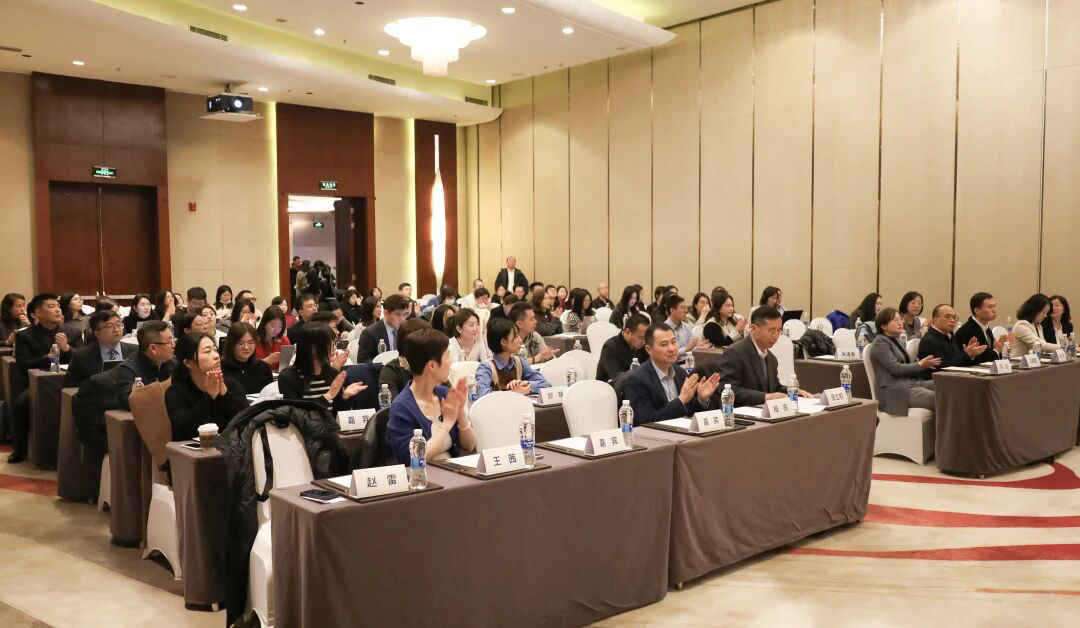
On March 6, 2026, the INTA 2026 Annual Meeting Beijing Warm-up Reception Event, hosted by the International Trademark Association (INTA) and co-organized by Unitalen Attorneys at Law, was successfully held.
The warm-up event aimed to introduce the highlights of the London Annual Meeting, showcase INTA flagship activities, key projects, and essential attendance points to the guests. Through communication, participants gained an in-depth understanding and made full use of INTA membership benefits, thereby maximizing the value of their membership. The meeting was hosted by Attorney ZHAO Lei, a partner of Unitalen. Mr. ZHOU Liquan, Deputy Director of Beijing Municipal Intellectual Property Office, Ms. SU Hong, INTA's Chief Representative in China, along with over 120 representatives from enterprises, law firms, and intellectual property professional institutions, attended the meeting.
From May 2 to 6, 2026, the 148th INTA Annual Meeting will make its debut in London, UK. We look forward to gathering with industry professionals from around the globe for this grand event!
| Unitalen and French Law Firm CABINET LAVOIX Jointly Hosted an Online Seminar on Litigation Practices of the European Unified Patent Court |
|---|
On the afternoon of March 12, 2026, Unitalen and French law firm CABINET LAVOIX jointly hosted an online seminar. Mr. Damien COLOMBIE, Chief Representative and Senior Partner of LAVOIX, and Mr. Camille PECNARD, Senior Litigation Attorney and Senior Partner, were invited to share strategies for safeguarding rights and practical operational advice for Chinese enterprises in UPC (Unified Patent Court) litigation, drawing on the latest judicial practices of the UPC. The seminar was conducted online via a Teams conference and was attended by Unitalen's patent attorneys, relevant staff from various offices, and representatives of several corporate clients.

|
|