Subscribe
Subscribe
Unsubscribe
Contact us
7th Floor,Scitech Place,22
Jianguomenwai
Avenue,Beijing
100004,China
T: +8610 59208888
F: +8610 59208588
Web:www.unitalen.com
E-mail:mail@unitalen.com
|
| No.205 August 28, 2023 | | In this issue |
|---|
| Trademark Office of CNIPA Releases the Correspondence Table of Codes for China-Japan-South Korea Similar Groups of Goods and Services in the Nice Classification NCL13-2026 | | CNIPA and PRH Launch Focal Point Mechanism Pilot Project | | CNIPA and the HIPO Extend the Focal Point Mechanism Pilot Project | | IPD Fully Adopts Electronic Document Submissions | | Signing of an MOU between the Beijing Municipal Intellectual Property Office and IPOS | | Cases in Spotlight |
|---|
| Case of Malicious Litigation Involving a Utility Model Patent for "Target Flowmeter" — (2022) Zui Gao Fa Zhi Min Zhong No. 1861 | | Case of Dispute over Unfair Competition Involving "Comic Transformation Effects" – Protection of AI Model Structure and Parameters under the Anti-Unfair Competition Law | | Unitalen News |
|---|
| Unitalen Law Firm Selected into the "Top 30 Excellent Brand Law Firms" by Lexpress in 2025 | | Unitalen's 2026 Voluntary Tree-Planting Activity Successfully Held |
| | In this issue |
|---|
Trademark Office of CNIPA Releases the Correspondence Table of Codes for China-Japan-South Korea Similar Groups of Goods and Services in the Nice Classification NCL13-2026 |
|---|
According to the cooperation arrangement in the field of trademarks among China, Japan, and South Korea, in order to further streamline procedures for applicants, a correspondence table of codes for China-Japan-South Korea similar groups of goods and services in the Nice Classification NCL13-2026 has now been released.
Attachment: Correspondence Table of Codes for China-Japan-South Korea Similar Groups of Goods and Services in the Nice Classification NCL13-2026.xlsx
(Source: Trademark Office of CNIPA) 
| CNIPA and PRH Launch Focal Point Mechanism Pilot Project |
|---|
The China National Intellectual Property Administration (CNIPA) and the Finnish Patent and Registration Office (PRH) have decided to jointly launch a pilot project for the CNIPA-PRH Focal Point Mechanism.
Both CNIPA and PRH will designate one officer each as IP focal point to provide consulting services on IP issues related to Chinese enterprises operating in Finland and Finnish enterprises operating in China, and to support these enterprises from both countries in obtaining effective IP protection.
During the project period, Chinese enterprises with relevant inquiries may contact the CNIPA IP liaison officer at the following details:
Liaison Officer: Mr. LI Ruifeng
Email: ip_support@cnipa.gov.cn
Finnish enterprises with relevant inquiries may contact the PRH IP liaison officer at the following details:
Email: int_affairs@prh.fi
The CNIPA-PRH Focal Point Mechanism pilot project will run for one year, from April 1, 2026 to March 31, 2027.
(Source: website of CNIPA)
| CNIPA and the HIPO Extend the Focal Point Mechanism Pilot Project |
|---|
The China National Intellectual Property Administration (CNIPA) and the Hungarian Intellectual Property Office (HIPO) have decided to extend the CNIPA-HIPO Focal Point Mechanism pilot project for another five years, from April 1, 2026 to March 31, 2031.
Both CNIPA and HIPO will continue to designate one officer each as IP focal point to provide consulting services on IP issues related to Chinese enterprises operating in Hungary and Hungarian enterprises operating in China.
During the operation of the project, Chinese enterprises with relevant inquiries may contact the CNIPA IP liaison officer at the following details:
Liaison Officer: Mr. LI Ruifeng
Email: ip_support@cnipa.gov.cn
Hungarian enterprises with relevant inquiries may contact the HIPO IP liaison officer at the following details:
Liaison Officer: Ms. Zsuzsanna Várfalviné Tari
Email: zsuzsanna.tari@hipo.gov.hu
(Source: website of CNIPA)
| IPD Fully Adopts Electronic Document Submissions |
|---|
Recently, the Intellectual Property Department (IPD) of the Government of the Hong Kong Special Administrative Region of the People's Republic of China officially launched the E-Filing system, enabling all parties to submit various types of documents electronically via the electronic filing system of the IPD. Documents eligible for electronic submission include:
•A statutory declaration, affidavit, and supporting document
•Written statement
•A court order, declaration, direction, or certificate of which an electronic seal of the court is applied to the document.
It should be noted that the declarant or affiant still needs to sign on the original paper copy, but only needs to submit a scanned copy of the fully signed document. The parties shall retain the original paper copy until the end of the procedure. The signed declaration, affidavit, and attachments still need to be delivered to the other party's service address. If the receipt is not acknowledged, the period will be calculated based on a deemed receipt (usually two working days after the mailing date). After the procedure is initiated, the parties may agree to electronic delivery.
(Source: WeChat official account of Unitalen Attorneys at Law)
| Signing of an MOU between the Beijing Municipal Intellectual Property Office and IPOS |
|---|
On March 25, the Beijing Municipal Intellectual Property Office and the Intellectual Property Office of Singapore (IPOS) signed a Memorandum of Understanding on IP cooperation at the Global Forum on Intellectual Property Protection and Innovation of the 2026 Zhongguancun Forum Annual Conference, marking a new stage of cooperation between the two offices in the field of intellectual property
(Source: Official WeChat account of the Beijing Municipal Intellectual Property Office)
| | Cases in Spotlight |
|---|
Case of Malicious Litigation Involving a Utility Model Patent for "Target Flowmeter" — (2022) Zui Gao Fa Zhi Min Zhong No. 1861 |
|---|
Case Brief
In March 2006, a utility model patent right for an "Internal Digital Target Flowmeter" owned by a certain instrumentation company was terminated due to unpaid annual fees. Dissatisfied with the CNIPA's decision to terminate the patent right at issue, the instrumentation company filed an administrative lawsuit with the Beijing Intellectual Property Court in 2017, but subsequently filed a motion to withdraw the lawsuit in 2018, which the court approved.
In May 2006, the company filed a lawsuit alleging that products manufactured and sold by a technology company and a machinery company in 2005 infringed its patent rights. The court ultimately ruled that the technology company's actions constituted patent infringement and ordered it to pay the instrumentation company RMB 125,000 in compensation.
Subsequently, the instrumentation company filed additional lawsuits with the court against the technology company in 2015, 2019, and 2020, alleging that the technology company had continued to mass-produce and sell products infringing the patent rights from May 2006 to 2010, and claiming compensation of RMB 3.5 million, RMB 4.5 million, and RMB 4.5 million, respectively. In the second and third lawsuits, the plaintiff withdrew the complaints after filing, while the fourth lawsuit was dismissed as withdrawn due to failure to pay the appeal case acceptance fee. During the fourth lawsuit, the instrumentation company applied for property preservation to freeze RMB 4.5 million of the technology company's property.
The technology company filed a lawsuit, alleging that the instrumentation company maliciously filed the third and fourth intellectual property lawsuits, knowing that its patent rights had been terminated. Therefore, the technology company requests a court order compelling the instrumentation company to issue a formal apology and compensate for economic losses, along with reasonable expenses for safeguarding rights.
Result of Ruling
The Xiamen Intermediate People's Court in Fujian Province issued a first-instance judgment ordering the instrumentation company to compensate the technology company for economic losses (including reasonable expenses) totaling RMB 60,000. The instrumentation company filed an appeal. Upon second-instance review, the Supreme People's Court held that the instrumentation company knew its lawsuits lacked a legal basis, yet still filed the third and fourth lawsuits, thereby causing harm to the opposing party. Given its intentional misconduct in contributing to the adverse consequences, the court deemed the actions to constitute malicious litigation. The appeal was rejected, and the original judgment was upheld.
Typical Significance
The case holds landmark significance for two "firsts": (1) it is the "first case" recognized by the Intellectual Property Court of the Supreme People's Court of China as malicious litigation in the field of intellectual property; and (2) it prominently addresses the "first question" that needs to be considered in the malicious litigation determination—namely, the issue of the basis for rights.
(Source: Typical Cases (II) on Regulating Intellectual Property Malicious Litigation issued by the Supreme People's Court)
| Case of Dispute over Unfair Competition Involving "Comic Transformation Effects" – Protection of AI Model Structure and Parameters under the Anti-Unfair Competition Law |
|---|
Case Numbers: Beijing Intellectual Property Court (2023) Jing 73 Min Zhong No. 3802, Beijing Chaoyang District People's Court (2023) Jing 0105 Min Chu No. 71391 [Case of Dispute over Unfair Competition Beijing Dou [Redacted] Technology Co., Ltd. vs. Yi [Redacted] ke Information and Technology (Beijing) Co., Ltd.]
Case Brief
On June 15, 2020, Beijing Dou [Redacted] Technology Co., Ltd. (hereinafter referred to as "Dou [Redacted] Company") launched comic transformation effects on its "Dou [Redacted]" APP (a mobile application). This special effect enables real-time transformation of user-captured photos and videos into comic-style images by reconstructing facial features in proportion to the user's actual appearance and making fine-tuning. Dou [Redacted] Company asserted that this functionality was achieved through AI technology after a complex research and development process and gained widespread market popularity following its launch. On August 4, 2020, Yi [Redacted] ke Information and Technology (Beijing) Co., Ltd. (hereinafter referred to as "Yi [Redacted] ke Company") launched a "Girl Comic" special effect on its mobile application. The comic images and videos generated by this special effect were visually highly similar to those produced by Dou [Redacted] Company's comic transformation effects. Dou [Redacted] Company alleged that Yi [Redacted] ke Company had copied the model structure and parameters of its comic transformation effects and that the imaging results of the "Girl Comic" special effect and the comic transformation effects were strikingly alike, constituting unfair competition. Consequently, Dou [Redacted] Company filed a lawsuit with the court, requesting the court to order Yi [Redacted] ke Company to cease infringement, eliminate impacts, and compensate Dou [Redacted] Company for economic losses and reasonable expenses totaling over RMB 5 million. The court of first instance ruled that Yi [Redacted] ke Company's actions had harmed Dou [Redacted] Company's competitive interests and constituted unfair competition as prohibited under Article 2 of the Anti-Unfair Competition Law. Dissatisfied with the judgment, Yi [Redacted] ke Company filed an appeal.
The Beijing Intellectual Property Court held in the second instance that Dou [Redacted] Company had invested substantial operational resources in the research and development of the comic transformation effects model. The parameters and structure of the comic transformation effects model, refined through data training and calibration, enabled users of the Dou [Redacted] App to generate animated images that corresponded to real-life individuals, and provided Dou [Redacted] Company with innovation advantages, operational revenues, and market interests, and thus the comic transformation effects model (structure and parameters) constitutes a competitive interest protected under the Anti-Unfair Competition Law for Dou [Redacted] Company. Based on a comparative analysis of evidence across three dimensions, including the possibility of access, comparison of model structure and parameters, and evidence of independent research and development, there was a high probability that Yi [Redacted] ke Company had directly utilized the structure and parameters of Dou [Redacted] Company's model involved. In the absence of contrary evidence, Yi [Redacted] ke Company should bear the consequences of failing to meet its burden of proof. By directly appropriating the AI model's structure and parameters, which another operator had developed through significant human, material, and financial investments, Yi [Redacted] ke Company avoided the time and costs of collecting training data and training the model. This allowed it to rapidly erode Dou [Redacted] Company's competitive edge, which had been established through hand-drawn training data and computational resources, and to compete for traffic and users shortly after Dou [Redacted] Company's comic transformation effects were launched. Such conduct violated widely recognized business ethics in the AI research, development, and operational sector, demonstrating its unfair nature. The "Girl Comic" special-effect model developed by Yi [Redacted] ke Company and the comic-transformation effects model created by Dou [Redacted] Company produce visually similar results, with significant overlap in user demographics, target markets, and channels/manners of product delivery. It can be concluded that the "Girl Comic" special effect serves as a strong substitute for and diverts traffic from the comic transformation effects. Yi [Redacted] ke Company has caused substantial damage to Dou [Redacted] Company's competitive interests, disrupted the operation of AI models and the healthy and orderly competition order, and harmed consumers' legitimate rights and interests. Consequently, Yi [Redacted] ke Company's actions have constituted unfair competition as prohibited under Article 2 of the Anti-Unfair Competition Law. The court of second instance accordingly rejected the appeal and upheld the original judgment.
Typical Significance
This case is a typical example of protecting developers' competitive interests regarding the structure and parameters of AI models in accordance with the law. The judgment in this case clearly states that the AI model parameters and structures developed by operators through data training, optimization, and tuning can bring them innovative advantages and business benefits, which fall within the competitive interests protected by the Anti-Unfair Competition Law. This case has positive significance for regulating the development of the AI industry and maintaining market competition order in emerging fields.
(Source: Typical Cases on Anti-Unfair Competition in 2025 (No. 8) issued by the Supreme People's Court)
| | Unitalen News |
|---|
Unitalen Law Firm Selected into the "Top 30 Excellent Brand Law Firms" by Lexpress in 2025 |
|---|
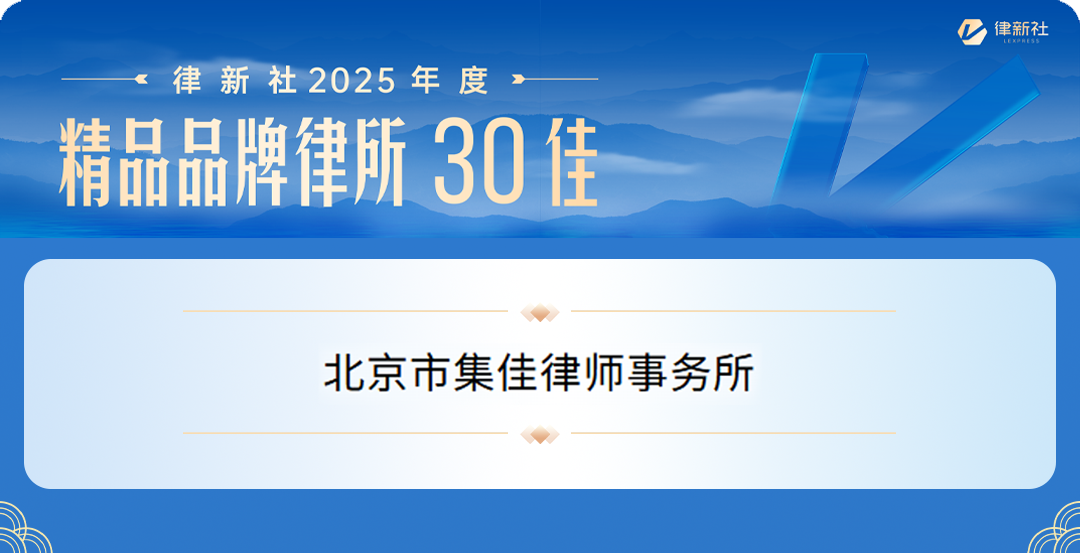
On March 14, 2025, the 4th Legal Service Brand Development Forum and Lexpress 2026 Brand Festival were held in Shanghai, and the BRANDS GUIDE TO LAW FIRMS OF EXCELLENCE (2025) by Lexpress was released on the spot. Unitalen Law Firm was successfully selected as one of the "Top 30 Excellent Brand Law Firms by Lexpress in 2025".
| Unitalen's 2026 Voluntary Tree-Planting Activity Successfully Held |
|---|
On April 11, Unitalen successfully organized the 10th Annual Voluntary Tree-Planting Activity, with over 150 employees and family members working tirelessly for more than an hour to plant over 300 seedlings. This effort added a fresh touch of green to the spring landscape and laid the foundation for a sustainable ecological future. To date, Unitalen has cumulatively planted over 3,800 seedlings in Beijing's suburbs, engaging more than 3,200 participants. Committed to its philanthropic mission, Unitalen will continue to press forward with unwavering dedication, giving back to society through concrete actions and helping create a better shared home.

|
|