Unitalen Represented Thermos in Winning First-Instance Case Involving Prominent Use of "THERMOS" as a Generic Term on Vacuum Flasks, with Damages of RMB 800,000 Awarded
March 5, 2026Case Brief
The Thermos brand was founded in Germany in 1904 and has grown to become the world's largest professional manufacturer of high-vacuum stainless steel household products, with products sold in more than 140 countries and enjoying an extremely high reputation worldwide. In 1995, the Thermos brand officially entered the Chinese market. After 30 years of development, Thermos (China) Housewares Co., Ltd. (hereinafter referred to as "Thermos" or "the Plaintiff") has established branches throughout provinces and cities across China. Its products include vacuum stainless steel insulated cups, thermal cookers, and other household and kitchen insulated products. Thermos has been awarded numerous honors, including "Top Ten Famous Brands of Metal Kitchen Utensils and Tableware in China" and "Top Ten Enterprises in China's Metal Kitchen Utensils and Tableware Manufacturing Industry".
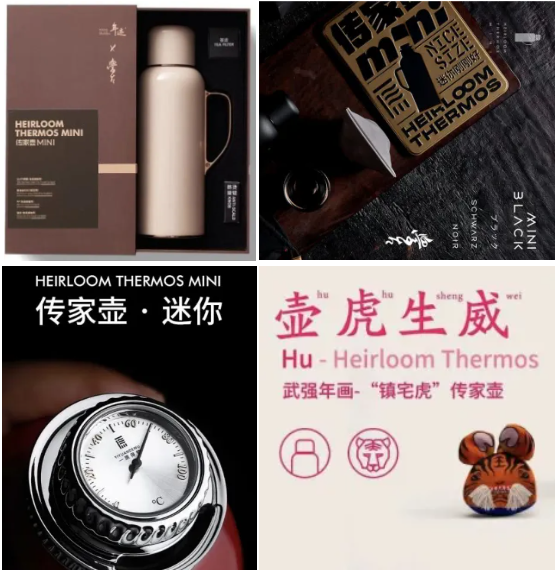
Upon investigation by the Plaintiff, it was found that a Shenzhen-based cultural company, a Shenzhen-based industrial company, and a Shenzhen-based technology company (collectively referred to as "the three Defendants") are affiliated companies, and have massively produced, sold, and promoted vacuum flasks prominently bearing the "THERMOS" mark (hereinafter referred to as the "accused products"). The three Defendants operated official stores on JD.com, Tmall, WeChat Stores, WeChat Mini Programs, and Douyin to sell the accused products, and promoted them through their official websites, WeChat Official Accounts, and Douyin. They prominently used the infringing mark "THERMOS" on official website domain names, product promotional images, product detail pages, the products themselves, product packaging, and product instruction manuals. In response to the above trademark infringement acts committed by the three Defendants, Thermos filed a lawsuit with the Shenzhen Qianhai Cooperation Zone People's Court, Guangdong Province.
Judgment Opinions
I. THERMOS does not constitute a generic term for vacuum flask products.
II. Considering the Defendants' trademark filing conduct, the Defendants had subjective intent to free-ride on a highly renowned brand, and the accused acts constitute trademark infringement.
III. The three Defendants shall bear legal liability for ceasing the infringement, compensating for damages, and eliminating adverse effects.
The Shenzhen Qianhai Cooperation Zone People's Court, Guangdong Province, held, in the first instance, that the three Defendants are affiliated companies and share a common commercial purpose of profiting from the production and sale of the accused products. They had subjective intent to commit joint infringement and objectively carried out joint infringing acts, and shall therefore bear joint and several liability for infringement. The Court ordered as follows: (1) the three Defendants shall immediately cease the infringing acts; (2) the Shenzhen-based cultural company shall publish a statement in China Intellectual Property News to eliminate the adverse effects; and (3) the three Defendants shall compensate the Plaintiff a total of RMB 800,000 for economic losses and reasonable expenses.
Judgment Highlights
The judgment marks the first time that the defense of "genericization of the THERMOS trademark" has been systematically addressed in a civil case. The Court clearly held that although the trademark has generated a certain association with "vacuum flasks" among some members of the public as a result of long-term and extensive use, it has not reached the level of being universally regarded as a generic term by the relevant public nationwide. This finding fills a long-standing gap in judicial practice caused by inadequate review of "trademark genericide".
The judgment establishes a judicial review criterion in determining "generic terms". It clearly elaborates on the statutory requirements and timing for determining a generic term, emphasizing that such determination shall be based on factual status as of the trademark filing date or registration date, and shall comprehensively consider national standards, industry practices, reference book records, and the general perception of the relevant public nationwide. In this case, the Court held that "THERMOS" continues to identify the source of the goods and has not lost its distinctiveness as a trademark.
The judgment completely rejects the "legitimacy" of bad-faith registration and use. The Court pointed out that the Defendants continued to use the "THERMOS" mark in commercial activities even after their trademark applications, including "XUEGUTHERMOS" and "HeirloomThermos," were rejected. Such conduct clearly demonstrates subjective intent to free-ride on the goodwill of the Plaintiff's brand, and does not constitute bona fide or reasonable descriptive use. This finding serves as a strong judicial deterrent against acts that attempt to register marks incorporating elements of well-known trademarks and then assert "fair use".
Typical Significance
The judgment vindicates "THERMOS" at the civil judicial level for the first time. It provides a valuable Chinese judicial precedent for many highly renowned brands at home and abroad facing similar risks. The civil judgment in this case is consistent with the administrative confirmation proceedings, in which the China National Intellectual Property Administration (CNIPA) has repeatedly rejected the Defendants' trademark registration applications incorporating the term "THERMOS". This reflects the inherent consistency between the findings in civil infringement cases and the standards applied in administrative reviews. The case also provides positive guidance for market entities on curbing "free-riding" conduct in commercial activities.